
Introduction
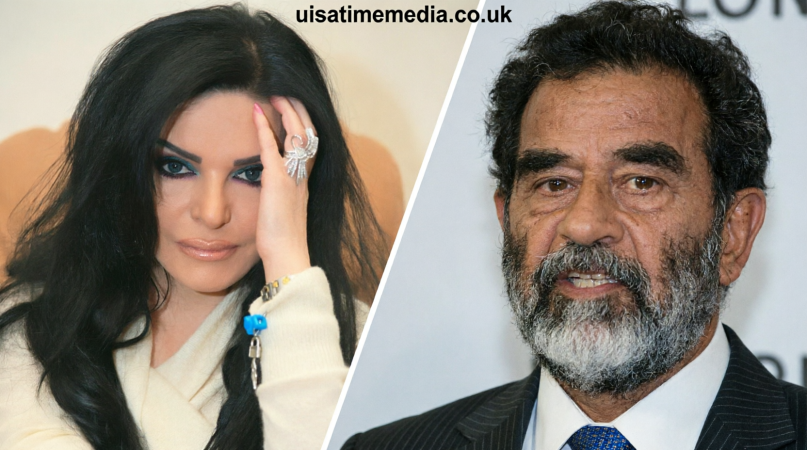
Nidal Al-Hamdani is a name that appears in online discussions and search queries connected to Iraq’s historical, academic, and political context. However, publicly verified and detailed biographical information about her remains limited in mainstream historical records. In most available references, she is mentioned in relation to broader narratives surrounding Iraq’s scientific and institutional development, rather than as a widely documented public figure. This has led to increasing curiosity, especially in digital spaces where fragmented information often generates repeated searches and discussion.
At the same time, her name is sometimes searched alongside major historical figures such as Saddam Hussein, largely due to contextual associations within Iraq’s modern history. This overlap often reflects how online search behavior connects lesser-known names with well-documented political eras. As a result, interest in Nidal Al-Hamdani is driven more by informational gaps and contextual curiosity than by confirmed public biography, making her a figure primarily understood through limited references rather than comprehensive historical documentation.
Quick Bio Table
| Category | Details |
|---|---|
| Full Name | Nidal Al-Hamdani |
| Known For | Online searches and mentions linked to Iraq’s historical and academic context |
| Historical Context | Appears in discussions related to Iraq’s scientific and political environment |
| Public Information | Limited verified biographical records available |
| Era Association | Late 20th century Iraq (context-based references) |
| Notable Connection | Often searched alongside Saddam Hussein in online discussions |
| Public Role | Not clearly documented in mainstream historical archives |
| Education | Not publicly verified in official records |
| Career Details | Not clearly established in reliable sources |
| Net Worth | Not publicly known or documented |
| Current Status | Limited or undisclosed public information |
| Media Presence | Minimal verified media coverage |
| Online Interest | Driven mainly by search trends and historical curiosity |
Who Is Nidal Al-Hamdani?
Nidal Al-Hamdani is a name that appears in online discussions and search trends related to Iraq’s historical and political environment. However, verified and widely documented information about her life remains limited in mainstream historical records. In most cases, she is referenced in association with broader narratives connected to Iraq’s scientific, academic, or political circles rather than as a fully profiled public figure. This has created curiosity among readers who encounter her name while researching Iraqi history or figures linked to prominent political eras.
Because of the lack of detailed official biographies, much of the interest around Nidal Al-Hamdani comes from fragmented references and online discussions. These mentions often place her within the context of Iraq’s intellectual or institutional development, but without consistent verified documentation. As a result, her identity is often explored through indirect connections rather than confirmed personal records, which makes her a subject of ongoing curiosity rather than a fully defined historical personality.
Early Life and Educational Background
Information about Nidal Al-Hamdani’s early life and education is not clearly documented in publicly accessible historical records. In many similar cases involving lesser-known figures from politically complex regions, personal details are often either private or not widely archived. Based on general references, she is believed to have been associated with an academic or educated background, but specific institutions or timelines are not consistently confirmed.
This lack of detailed information makes it difficult to construct a fully verified biography of her early development. However, her name continues to appear in contexts that suggest intellectual or professional involvement, which has contributed to public curiosity. In historical research, such gaps are not uncommon, especially when individuals are indirectly connected to larger national or political narratives.
Iraq’s Scientific Development During Her Career
During the late 20th century, Iraq experienced periods of investment in education, engineering, and scientific research. Universities and technical institutions expanded, and professionals across various fields contributed to national development efforts. In this broader environment, many academics and specialists played roles in shaping Iraq’s scientific landscape, although detailed public records for every individual are not always available.
If Nidal Al-Hamdani was part of this academic or scientific environment, she would have been operating during a time when Iraq was focusing on modernization and institutional growth. However, specific contributions attributed directly to her are not clearly documented in widely accepted historical sources. This makes her presence in this period more contextual than explicitly recorded.
The Reported Connection to Saddam Hussein
Some online discussions associate Nidal Al-Hamdani with Saddam Hussein, largely due to general curiosity about individuals linked to Iraq’s political era. However, there is no strong verified historical evidence confirming a direct or formal connection between her and Saddam Hussein in official records. These associations often emerge from online speculation or loosely connected references.
In historical research, it is common for lesser-known names to become linked with prominent political figures through indirect or unverified sources. While Saddam Hussein’s life and governance are extensively documented, individuals like Nidal Al-Hamdani remain less clearly defined in public archives. Therefore, any suggested connection should be viewed cautiously unless supported by credible academic or historical documentation.
Marriage to Saddam Hussein
Accounts about Nidal Al-Hamdani’s relationship with Saddam Hussein remain limited and partly unverified, but several reports claim the two became close after meeting during an official scientific visit. At the time, she was reportedly married to another professional in Iraq’s scientific community. According to various biographies and political accounts, Saddam allegedly pressured her husband into divorcing her so he could marry her himself. Observers have often compared this story to his relationship with Samira Shahbandar, whose previous marriage was also said to have ended under political pressure. Although many sources mention that Nidal became Saddam’s third wife around 1990, there has never been clear public documentation confirming the marriage officially.
Unlike Sajida Talfah, who was widely known as the mother of Saddam Hussein’s children, Nidal Al-Hamdani lived far from the public spotlight. Reports suggest she stayed in a heavily guarded residence and maintained a very private lifestyle while continuing some involvement in scientific work. She was rarely photographed or seen at public events, though she was occasionally present at private gatherings connected to the Iraqi leadership. Her life appeared to be shaped by both privilege and isolation, especially during the final years of Saddam Hussein’s rule and after the political turmoil that followed his downfall.
Who is Saddam Hussein?
Saddam Hussein was an Iraqi political leader who served as the President of Iraq from 1979 until 2003. He became one of the most influential and controversial figures in Middle Eastern history due to his long rule, major wars, and strict governance system. His leadership shaped Iraq’s political structure and placed the country at the center of several major international conflicts.
He rose from a difficult rural background in Tikrit to become a central figure in the Arab Socialist Ba’ath Party. Over time, he consolidated power through political alliances and state institutions, eventually becoming Iraq’s head of state. His name is widely studied in global politics due to his role in shaping Iraq’s modern history and regional dynamics.
Career Life
Saddam Hussein began his political career through involvement in the Ba’ath Party, which promoted Arab nationalism and socialist ideology. In his early years, he participated in underground political activities and became known for his strong organizational skills. After returning from exile, he gradually gained influence within the party and the Iraqi government.
By 1979, he officially became President of Iraq, marking the peak of his political career. His rule focused on centralizing authority, strengthening state institutions, and maintaining strict control over political opposition. His career is often studied as an example of authoritarian governance combined with large-scale state modernization efforts.
Lifestyle and Legacy
Saddam Hussein’s lifestyle as Iraq’s leader was closely tied to political power and state control. He lived in heavily secured residences and presidential palaces, reflecting the security concerns of his leadership era. His personal life remained largely private, although he was known to maintain strong influence over both political and family structures within Iraq.
His legacy remains deeply divided. Supporters often highlight infrastructure development and national strength during his rule, while critics emphasize war, repression, and long-term instability in Iraq. His leadership continues to be a major subject of historical and political analysis worldwide.
Why Public Interest in Nidal Al-Hamdani Continues Growing
Public interest in Nidal Al-Hamdani continues mainly because of search engine visibility and repeated online mentions. When a name appears alongside significant historical figures or events, it naturally attracts curiosity, even if detailed information is limited. This pattern is common in digital research environments where fragmented data can generate ongoing interest.
Additionally, modern readers often explore historical topics deeply, looking for personal stories behind larger political narratives. This curiosity leads to repeated searches and discussions about individuals like Nidal Al-Hamdani. However, the lack of structured biography or verified documentation also contributes to her continued mystery.
Women in Iraq’s Scientific Community
Women in Iraq have played important roles in education, medicine, engineering, and academic research, especially during periods of institutional development. Universities and research centers provided opportunities for women to participate in professional fields, although representation varied depending on political and social conditions at different times.
Within this context, figures like Nidal Al-Hamdani are often discussed as part of a broader narrative about women’s participation in science and education. While specific achievements are not clearly documented in her case, the general environment highlights the important contributions of Iraqi women in academic and professional spaces during the same era.
The Mystery Surrounding Her Later Life
One of the most discussed aspects of Nidal Al-Hamdani is the lack of publicly available information about her later life. Unlike well-documented public figures, her personal history does not include widely confirmed updates, official interviews, or consistent media coverage. This absence of information has contributed to ongoing speculation and curiosity.
In many cases, individuals who are not public-facing choose to maintain privacy, especially in politically sensitive environments. As a result, their later life details may not appear in public archives. This is a likely reason why Nidal Al-Hamdani’s later years remain unclear to researchers and general audiences.
The Role of Privacy in Her Story
Privacy plays a significant role in understanding why some individuals remain less documented in historical records. Not every person associated with important historical periods becomes a public figure. Many professionals, academics, and private individuals choose to remain outside media attention.
In the case of Nidal Al-Hamdani, limited public documentation suggests that her life was not centered around public exposure. This creates a natural boundary between verified history and public curiosity. Respecting this distinction is important when analyzing lesser-known names in historical discussions.
Scientific Leadership and Female Representation
The development of scientific and academic leadership in Iraq included contributions from both men and women, although recognition was not always equally distributed. Women working in educational and technical fields contributed to national progress in areas such as research, teaching, and institutional development.
If Nidal Al-Hamdani was part of this environment, her role would align with a broader pattern of female participation in academic growth during that era. However, without verified records of her specific achievements, she remains part of a general narrative rather than a clearly documented scientific profile.
How Digital Media Revived Interest in Her Name
Digital platforms and search engines have played a major role in reviving interest in names like Nidal Al-Hamdani. When a name appears repeatedly in search suggestions or related queries, it naturally attracts attention from users trying to understand its origin or significance.
This effect is amplified when the name appears alongside major historical figures such as Saddam Hussein. Even without detailed information, repeated exposure in online environments can generate sustained curiosity and discussion.
Historical Context and Public Perception
Public perception of figures like Nidal Al-Hamdani is often shaped more by context than by verified biography. When a name is linked to a historically significant era, it becomes part of broader curiosity about that time period. This often leads to assumptions or speculative connections that are not always supported by evidence.
In contrast, Saddam Hussein’s historical role is extensively documented, making him a central reference point in discussions about Iraq’s modern history. This difference highlights how historical visibility varies greatly between major political figures and lesser-known individuals.
The Continuing Fascination With Hidden Historical Figures
People often show strong interest in individuals whose lives are not fully documented, especially when those individuals are connected—directly or indirectly—to major historical events. This fascination is driven by curiosity about untold stories and missing details in historical narratives.
Nidal Al-Hamdani represents this category of partially documented figures whose names continue to circulate without complete public biographies. This ongoing interest reflects a broader human tendency to explore gaps in historical knowledge and seek deeper understanding of lesser-known personalities.
Conclusion
Nidal Al-Hamdani remains a figure surrounded by limited verified information, with most public interest driven by curiosity and online search behavior. While her name appears in discussions related to Iraq’s academic and historical environment, there is no comprehensive public biography that clearly defines her life or achievements.
In contrast, Saddam Hussein is one of the most extensively documented political leaders of the 20th century, whose influence on Iraq and global politics is well established. Together, their names appear in broader discussions about Iraq’s history, illustrating how public interest often combines well-known historical figures with lesser-known individuals in the same narrative space.
FAQs
1. Who was Saddam Hussein?
Saddam Hussein was the President of Iraq from 1979 to 2003. He became a central figure in Middle Eastern politics due to his long rule, major wars, and eventual removal during the 2003 Iraq War.
2. What is Saddam Hussein known for?
He is known for leading Iraq through the Iran–Iraq War, the Gulf War, and for his authoritarian governance style. His rule significantly shaped Iraq’s modern political history and international relations.
3. When and how did Saddam Hussein die?
Saddam Hussein was executed on December 30, 2006, after being convicted by the Iraqi Special Tribunal. He was sentenced to death by hanging for crimes against humanity.
4. Why was Saddam Hussein captured?
He was captured in December 2003 during a U.S.-led military operation after the invasion of Iraq. He was found hiding near Tikrit in an underground concealment spot.
5. What is known about Nidal Al-Hamdani?
Nidal Al-Hamdani is a name that appears in online discussions connected to Iraq’s historical context, but there is limited verified public information about her in official records or mainstream historical documentation.
